.avif)
Heat Pump Maintenance in Corona Del Mar, CA
Heat pump maintenance in Corona Del Mar, CA emphasizes proactive, regular service tailored to coastal conditions to maximize efficiency, prevent outages, and extend equipment life. The guide outlines common local issues such as salt-induced corrosion, restricted airflow, refrigerant leaks, electrical wear, and condensate problems, and provides a comprehensive seasonal tune-up checklist, diagnostic tests, and recommended service intervals. It also covers typical repairs, homeowner maintenance tips, what to expect during a professional visit, and the long-term benefits of a structured maintenance program.
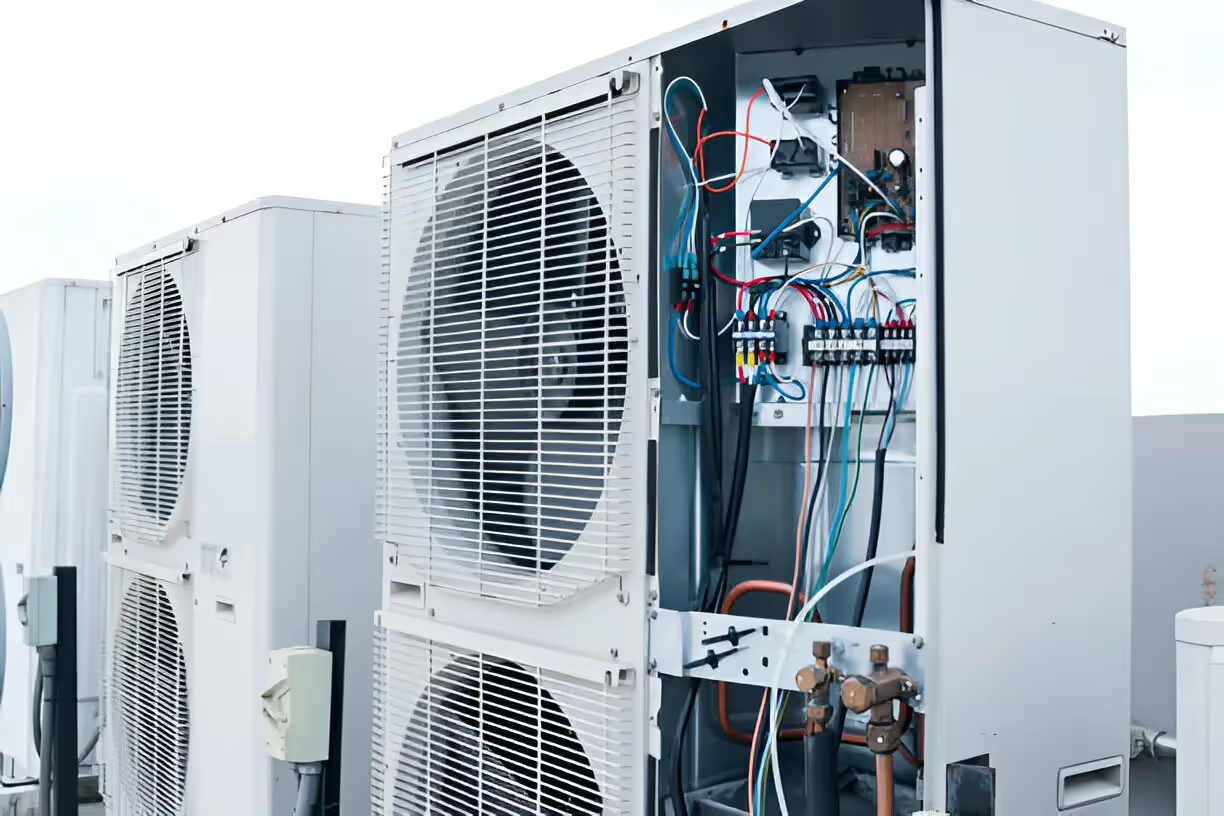
Heat Pump Maintenance in Corona Del Mar, CA
Keeping your heat pump running efficiently in Corona Del Mar, CA means tailored, regular maintenance that accounts for coastal conditions and year-round comfort needs. Proper maintenance reduces energy bills, prevents unexpected breakdowns, and extends equipment life — all critical in a seaside community where salt air and humidity accelerate wear. This page explains what a professional heat pump maintenance program should include, common local issues, recommended intervals, and what to expect during a service visit.
Why proactive heat pump maintenance matters in Corona Del Mar
Corona Del Mar homes face a few local influences that make maintenance especially important:
- Coastal salt spray and higher humidity can corrode outdoor coils, electrical terminals, and fasteners faster than inland areas.
- Mild winters and warm, humid summers mean heat pumps operate year-round, increasing cumulative runtime and wear.
- Many homes have compact mechanical spaces and ductwork where moisture and salt build-up can reduce indoor air quality and system efficiency.
Regular maintenance helps preserve performance, lower operating costs, and reduce the chance of mid-season failures when repair wait times can be longer.
Common heat pump issues in Corona Del Mar
Understanding frequent problems helps homeowners prioritize maintenance:
- Corroded coils and fins from salt exposure, leading to reduced heat transfer
- Restricted airflow from dirty filters, coils, or partially blocked return registers
- Refrigerant leaks or incorrect charge that reduce heating and cooling capacity
- Electrical wear: failing capacitors, contactors, or frayed wiring due to moisture and corrosion
- Condensate drain clogs and pan corrosion that cause water backup and possible indoor leaks
- Reduced defrost performance in older units or units with refrigerant/controls issues
Typical heat pump tune-up checklist
A full tune-up should cover all critical systems and be recorded for future comparisons. Key items include:
- Visual inspection of outdoor and indoor units for corrosion, damage, and debris
- Air filter inspection and replacement or cleaning recommendations
- Evaporator and condenser coil cleaning to restore heat transfer
- Straightening and cleaning of condenser fins as needed
- Refrigerant check: measuring pressures, validating correct charge, and checking for leaks
- Electrical inspection: tightening connections, testing capacitors, contactors, relays, and safety controls
- Motor and fan inspection: lubrication where applicable, checking belt condition and tension
- Thermostat calibration and control system check, including cycle timing
- Performance testing: airflow measurement, delta-T (temperature split) across the coil, and overall unit capacity verification
- Condensate drain and pan cleaning; verifying proper slope and trap condition
- Defrost system test (if applicable)
- Outdoor unit leveling and base condition check
- Recommendations for corrosion protection or protective coatings where needed
Diagnostic and performance testing explained
Professionals use several objective tests to evaluate a heat pump’s condition:
- Refrigerant pressure and temperature readings to calculate superheat/subcooling and confirm correct charge
- Electrical load and voltage testing to identify failing motors or hard-starting compressors
- Airflow checks (CFM estimation) to ensure the system has adequate return and supply flow
- Temperature split testing to confirm adequate heat transfer; low split often indicates airflow or charge problems
- Leak detection using electronic or dye methods when pressures or performance suggest refrigerant loss
These diagnostics pinpoint small issues before they become major failures and help establish a baseline for future visits.
Recommended service intervals for Corona Del Mar homes
Local climate and usage patterns influence how often you should schedule maintenance:
- Professional inspection and tune-up: at least twice per year (spring and fall) to cover cooling and heating seasons. This is the most common recommendation for year-round climates like Corona Del Mar.
- Filters: check monthly; replace or clean every 1-3 months depending on filter type, occupancy, pets, and indoor air quality needs.
- Coils and outdoor unit rinse: inspect and clean at least annually; consider an additional rinse after high winds or seasonal salt exposure.
- Older units or systems with known issues: quarterly inspections can prevent repeated breakdowns and identify corrosion early.
Adjust intervals upward for homes very close to the ocean, or for systems showing early signs of corrosion or performance loss.
Repairs commonly discovered during maintenance and how they are handled
Routine maintenance often uncovers problems that are simpler and less expensive to fix when caught early:
- Refrigerant leaks — located and repaired; affected components tested and system recharged to specification
- Failing capacitors or contactors — replaced to restore reliable starting and reduce compressor stress
- Fan motor or blower issues — repaired or replaced to restore correct airflow
- Corroded terminals and connections — cleaned or replaced and protected with corrosion inhibitors
- Condensate drain clogs — cleared; pans inspected and replaced if corroded
- Coil damage — minor fin damage can be straightened; heavily corroded coils may require replacement to restore efficiency
Addressing these issues during scheduled maintenance helps avoid emergency service calls and extends system life.
Maintenance tips specific to Corona Del Mar homes
Homeowners can take simple steps between scheduled visits:
- Rinse outdoor unit occasionally with fresh water to remove salt and dust; avoid high-pressure washers on fins
- Keep at least 2 feet of clearance around the outdoor unit and trim back salty landscaping
- Monitor humidity and use exhaust fans to reduce indoor moisture that can accelerate corrosion
- Use high-quality pleated filters or HVAC air cleaners if indoor air quality is a priority
- Consider sacrificial anode or protective coatings for metal components if your property is very close to the shoreline
What to expect during a professional maintenance visit
A thorough visit is methodical and documented:
- Arrival and system history review — technician confirms prior issues and any homeowner concerns
- Visual inspection of indoor and outdoor components for damage and corrosion
- Filter check and replacement if needed
- Coil cleaning, condenser fin inspection and straightening
- Refrigerant and electrical system testing, including performance measurements
- Condensate system inspection and treatment
- Operational test with temperature and airflow verification
- Written summary of findings, recommended repairs or upgrades, and any scheduled follow-up
Regular documentation creates a maintenance record that improves diagnostics and justifies repair or replacement decisions.
Long-term benefits of a scheduled maintenance program
Consistent maintenance delivers measurable outcomes for Corona Del Mar homeowners:
- Improved energy efficiency and lower monthly utility costs
- Fewer unexpected breakdowns and less disruptive emergency repairs
- Extended equipment life and better return on investment
- More consistent indoor comfort and humidity control
- Better indoor air quality from clean coils, ducts, and filters
Maintenance is the practical way to protect comfort and asset value in coastal Southern California homes.
Maintaining a heat pump in Corona Del Mar means accounting for year-round operation and coastal exposure. A combination of semiannual professional tune-ups, regular filter care, and a few seasonal homeowner actions keeps systems running efficiently and reliably.
hear what our satisfied clients have to say
.avif)
Service areas

