.avif)
AC Repair in Garden Grove, CA
This page outlines emergency and routine AC repair services in Garden Grove, explaining common failure symptoms, diagnostic steps, and typical repair solutions. It covers how technicians assess airflow performance, diagnose refrigerant leaks, coil issues, electrical faults, and test post-repair performance. It also explains pricing structure, warranties, and same-day or after-hours availability. The guide emphasizes prompt repairs, transparent estimates, and preventive maintenance to extend system life and preserve indoor comfort in Garden Grove's hot, humid climate.
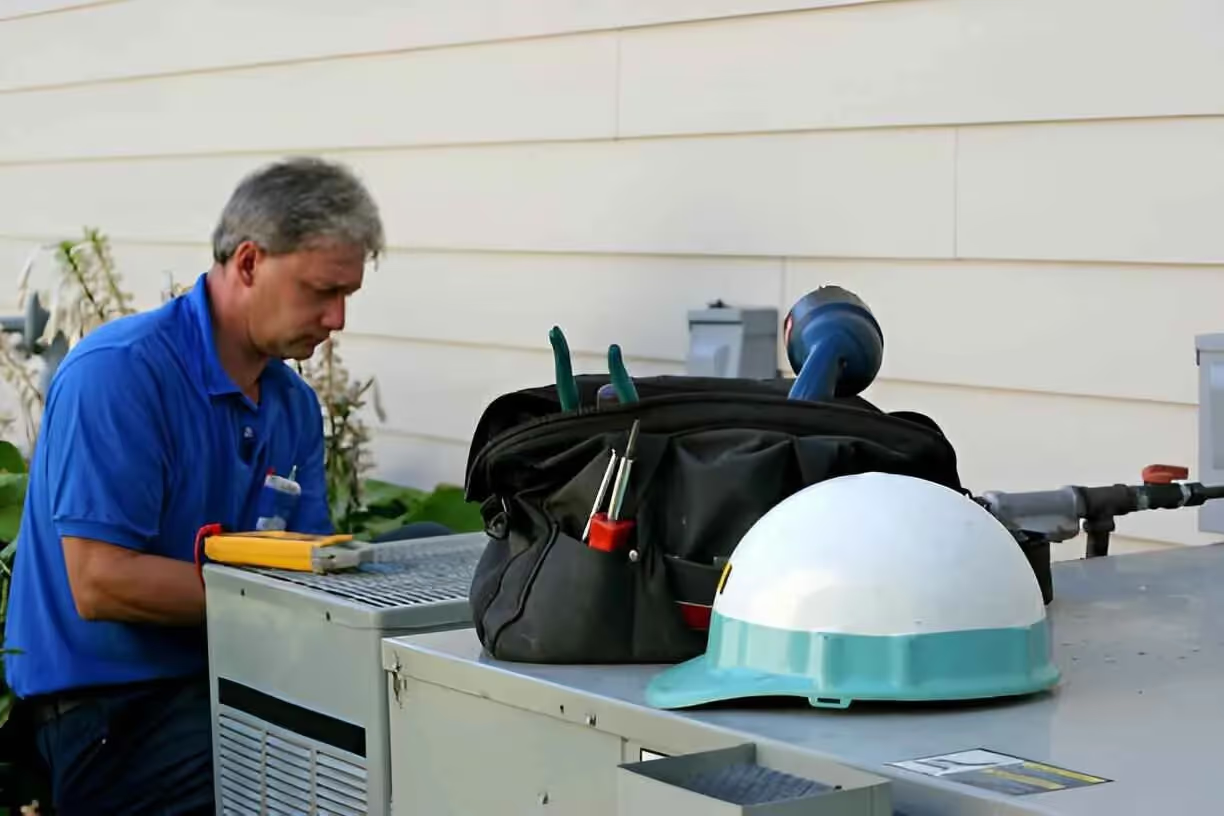
AC Repair in Garden Grove, CA
When your air conditioner fails in Garden Grove, CA, the discomfort and potential home damage can escalate quickly. With hot, humid summers and the occasional heatwave, timely AC repair is essential to protect indoor comfort and prevent larger, costlier failures. This page explains emergency and routine air conditioner repair services, common failure symptoms in Garden Grove homes, the diagnostic steps technicians use, typical repair solutions and parts replacement, expected response times, general pricing structure, warranty and guarantee information, and how same-day or after-hours service is handled.
Why timely AC repair matters in Garden Grove
Garden Grove’s warm coastal-suburban climate puts heavy seasonal strain on HVAC systems. High run-times, salt air near coastal pockets, and humidity increase the risk of refrigerant leaks, coil corrosion, clogged drains, and electrical wear. Prompt repairs restore comfort, improve efficiency, avoid secondary damage (like water from blocked condensate lines), and extend the life of your system.
Common AC failure symptoms in Garden Grove homes
Recognizing the signs early helps prevent bigger breakdowns. Typical symptoms include:
- No cooling or weak airflow: often caused by refrigerant leaks, compressor failure, or blocked filters/ducts.
- Strange noises (buzzing, grinding, rattling): could indicate motor or fan bearing failures, loose components, or failing compressors.
- Water leaks around indoor unit: usually a clogged condensate drain, frozen evaporator coils, or disconnected drain pan.
- Frequent cycling or short-cycling: typically from electrical issues, incorrect thermostat settings, or a failing compressor.
- Warm air from vents when cooling is on: refrigerant issues, compressor problems, or reversed airflow.
- Electrical faults or tripped breakers: worn capacitors, contactors, or loose wiring creating safety risks.
- Foul or musty odors: mold in the drain or coils, or burnt electrical components.
How technicians diagnose AC problems
A systematic, safety-first diagnostic approach ensures accurate fixes without unnecessary parts replacement. Typical steps include:
- Initial interview and symptom review: technicians ask about recent performance, sounds, and any error codes.
- Visual inspection: checking the condenser, evaporator coil, filters, refrigerant lines, and wiring for obvious issues.
- Thermostat and control checks: verifying settings, battery, and communication with the system.
- Electrical testing: measuring voltage, amps, and component continuity for capacitors, motors, and contactors.
- Refrigerant pressure testing and leak detection: confirming correct charge and locating leaks with electronic detectors or dye.
- Airflow assessment: inspecting filters, blower motors, and ducts for blockages or restrictions.
- Component-specific testing: testing capacitors, motors, and the compressor under load to determine failures.
- Functional run test: operating the system to observe performance, temperature split, and cycling behavior.
Technicians document findings and provide a clear explanation of needed repairs, parts expected to be replaced, and likely outcomes.
Typical repair solutions and parts replacement
Repairs are tailored to the diagnosed issue. Common solutions include:
- Refrigerant leak repair and recharge: locating and repairing leaks, then recharging to manufacturer specifications.
- Capacitor replacement: a common fix for motors that struggle to start or run.
- Contactor and relay replacement: for systems with electrical switching failures.
- Fan motor or blower motor replacement: restores proper airflow and cooling.
- Compressor repair or replacement: required when the compressor is mechanically or electrically failed.
- Evaporator or condenser coil cleaning and repair: improves heat transfer and system efficiency.
- Condensate drain clearing or condensate pump replacement: prevents water leaks and overflow damage.
- Control board or thermostat replacement: for intermittent or consistent control failures.
- Ductwork repairs and sealing: when airflow problems are due to leaks or poor insulation.
Each repair includes testing after replacement to confirm the system runs correctly and efficiently.
Emergency vs routine service and expected response times
Garden Grove residents often need both emergency and scheduled service. Emergency repairs address immediate safety or comfort risks—complete loss of cooling during extreme heat, major refrigerant leaks, or electrical hazards. Routine service covers diagnostic visits, preventative repairs, and off-season tune-ups.
Typical response patterns:
- Emergency service: prioritized dispatch with the goal of arriving as quickly as local conditions allow (many providers aim for same-day or within a few hours for true emergencies).
- Same-day non-emergency: technicians often provide same-day appointments for urgent but not life-safety scenarios.
- Routine appointments: scheduled during normal business hours, often within a few days depending on season and demand.
Availability varies by season—peak summer demand may extend waiting times—so early reporting and clear symptom descriptions help prioritize service.
Pricing structure and transparent estimates
Pricing for AC repair in Garden Grove generally follows transparent steps rather than hidden fees:
- Diagnostic fee: a flat or time-based inspection charge to identify the problem and produce a written estimate.
- Labor and parts: itemized on the estimate with clear descriptions of parts (manufacturer part numbers where applicable) and labor hours.
- Emergency or after-hours fees: many providers apply higher rates outside normal business hours; these are disclosed before work begins.
- Written estimate and approval: technicians provide a written repair estimate after diagnosis; work proceeds only with homeowner approval.
Estimates should explain alternatives (repair vs replacement) and long-term cost implications like efficiency and expected remaining life.
Warranty and guarantee information
Reliable repair services back their work with clear warranties and guarantees:
- Parts: most replacement parts carry manufacturer warranties (duration varies by part and brand).
- Labor: reputable providers commonly offer a service labor warranty (often 30 to 90 days) covering workmanship on the repair.
- Performance guarantees: some repairs include short-term satisfaction guarantees ensuring the issue is resolved without repeat charges within the guarantee window.
Always request written warranty terms for both parts and labor and retain repair documentation for future warranty claims.
How same-day and after-hours scheduling works
Same-day and after-hours service is structured to handle urgent needs while ensuring safe, documented work:
- Availability: many providers maintain emergency dispatch slots and rotating after-hours coverage for rapid response.
- What to have ready: providing your address, unit make/model, symptoms, and any recent changes (power outages, unusual noises) helps speed diagnosis.
- On-site protocol: technicians typically perform a safety walk-through, explain findings, and present a written estimate for any work beyond diagnostics.
- Follow-up: after repair, technicians document findings, parts replaced, and any recommended maintenance to prevent recurrence.
Preventive advice to reduce future repairs
Timely maintenance reduces emergency calls and extends equipment life. Recommended steps for Garden Grove homes:
- Replace or clean filters every 1–3 months during heavy use.
- Schedule seasonal tune-ups before peak cooling season.
- Keep condenser area clear of debris and landscaping.
- Ensure proper attic insulation and sealed ducts to reduce system load.
- Watch for early symptoms (unusual noises, higher bills, inconsistent cooling) and address them before failure.
Prompt, professional AC repair restores comfort and reduces long-term costs. In Garden Grove’s demanding climate, combining timely repairs with preventive maintenance preserves system performance and indoor comfort.
hear what our satisfied clients have to say
.avif)
Service areas

