.avif)
Heat Pump Service in Lakewood, CA
Heat pump service for Lakewood, CA homes offers comprehensive repair, installation, replacement, preventive maintenance, and emergency support tailored to local conditions. The guide explains diagnostics, response times, and warranties, emphasizing timely maintenance to prevent failures, preserve efficiency, and protect manufacturer warranties. It outlines typical repair durations, parts considerations, and transparent estimates, plus preventive plans that improve reliability and reduce costs. By prioritizing proactive upkeep and rapid problem resolution, homeowners can maintain comfortable indoor climates year-round.
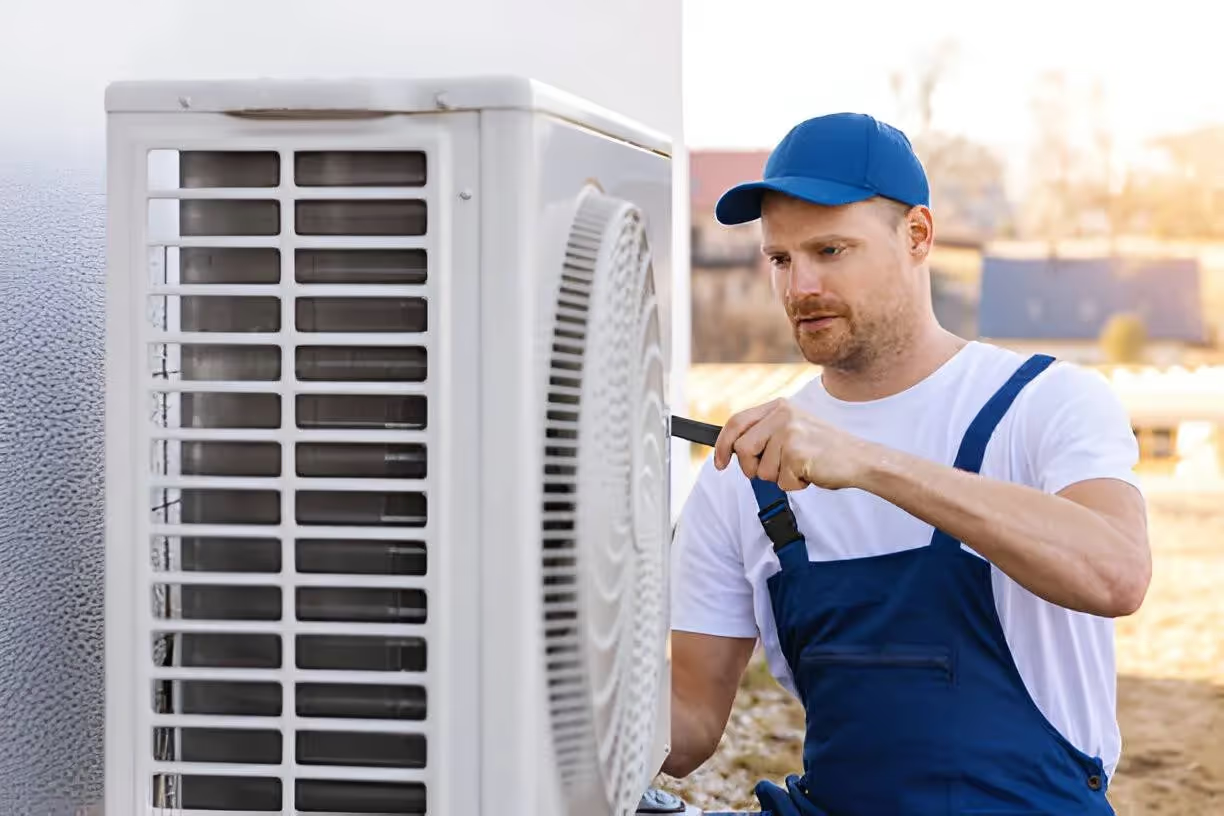
Heat Pump Service in Lakewood, CA
Heat pumps are the year-round climate solution for many Lakewood, CA homes, providing efficient cooling through hot summers and gentle heating during mild winters. Proper service keeps your system running reliably, reduces energy costs, and prevents inconvenient breakdowns during peak weather. This page explains comprehensive heat pump services you can expect in Lakewood, CA — repair, installation, replacement, preventive maintenance, and emergency support — plus response times, service guarantees, diagnostics, and parts and labor policies tailored to local needs.
Why timely heat pump service matters in Lakewood, CA
Lakewood experiences warm summers, periodic heat waves, and a coastal influence that can increase corrosion risk. Heat pumps in this region face heavy cooling demand and exposure to salt air, which accelerates wear on outdoor components. Regular service helps:
- Maintain peak cooling performance during summer demand
- Prevent premature component failure from corrosion and debris
- Preserve efficiency to manage energy costs in Southern California
- Maintain manufacturer warranties through documented maintenance
Common heat pump issues in Lakewood, CA
Understanding typical failures helps you prioritize service. Common heat pump problems in Lakewood include:
- Weak cooling or heating output due to refrigerant loss or low charge
- Short cycling caused by thermostat issues, airflow restrictions, or electrical faults
- Frozen evaporator coils from airflow problems or low refrigerant
- Compressor or capacitor failure from age and heavy seasonal use
- Corroded outdoor fan motors, coils, or electrical connections due to coastal air
- Noisy operation from loose components, worn bearings, or refrigerant issues
- Drain line clogs leading to water leaks or indoor condensate problems
- Inefficient operation due to dirty coils, clogged filters, or duct leaks
Types of heat pump services offered
- Repair: Targeted fixes for refrigerant leaks, electrical failures, capacitor and contactor replacement, compressor service, fan and motor repairs, reversing valve work, and thermostat troubleshooting.
- Installation: Sizing and selecting equipment appropriate for Lakewood climate and home layout, ductwork assessment, proper refrigerant charge, and compliance with local codes.
- Replacement: Full system replacement when repair is no longer cost-effective, including equipment removal, system sizing (Manual J/Manual S considerations), and updated SEER/HSPF equipment options.
- Preventive maintenance: Seasonal tune-ups that include cleaning coils, inspecting electrical components, checking refrigerant levels, filter changes, lubrication, and performance testing.
- Emergency support: Rapid response for system failures during heat waves or when indoor comfort is compromised.
Typical diagnostics and troubleshooting process
A standardized diagnostic approach ensures transparent findings and accurate estimates:
- Visual inspection of outdoor and indoor units for physical damage, corrosion, and airflow restrictions.
- Verify power and thermostat operation; check service disconnects, breakers, and safety switches.
- Inspect air filters, ductwork, and registers for blockages that reduce airflow.
- Measure operating pressures and temperatures to assess refrigerant charge and evaporator performance.
- Test electrical components: capacitors, contactors, relays, and compressor windings.
- Run full-system performance tests to evaluate cooling/heating capacity, cycling behavior, and temperature differentials.
- Provide a written diagnostic report outlining observed issues, recommended repairs or replacement options, estimated parts and labor, and warranty implications.
Diagnostics typically require 30 minutes to 90 minutes depending on system complexity. Extensive leak detection or compressor internal diagnostics may extend that time.
Repair and replacement explanations
- Refrigerant leaks: Repairs include locating and patching leaks, replacing contaminated components, and recharging to correct pressure. Older refrigerant types may require system replacement to meet regulations.
- Electrical and control failures: Replacing failed capacitors, contactors, or control boards often restores operation quickly; severe compressor failures can necessitate partial or full system replacement.
- Compressor issues: A failing compressor is a major repair; options include compressor replacement when available and economical, or full system replacement if the unit is near end of life.
- Coil and fan repairs: Coil cleaning, fin straightening, and fan motor replacement restore airflow and efficiency. Outdoor coil corrosion may require coil replacement or system upgrade to newer materials.
- Duct and airflow fixes: Sealing ducts, adjusting airflow, and balancing can resolve many comfort complaints without major equipment changes.
Expected repair durations vary: most common repairs complete in 1-4 hours; major component swaps or full replacements may take a full day.
Parts and labor policies and warranties
- Parts warranties: New equipment typically carries manufacturer parts warranties (commonly 5 to 10 years depending on brand and model). Replacement parts for repairs may carry separate limited warranties (often 90 days to 1 year).
- Labor warranties: Repair labor warranties typically range from 30 days to 1 year depending on the provider and nature of work. Labor warranties cover the performed repair work, not subsequent unrelated failures.
- Diagnostic fees and credits: Many service models apply a diagnostic fee for the initial visit; this fee is often credited toward approved repair work performed at the same visit.
- OEM vs aftermarket parts: Using OEM parts preserves manufacturer warranties for newer equipment; high-quality aftermarket parts may be used for older systems when appropriate and can be disclosed in estimates.
- Transparency: Clear, itemized estimates should specify parts, labor, warranty terms, and whether warranties require proof of regular maintenance.
Emergency support and response times in Lakewood
Lakewood homeowners often need fast response during heat waves. Typical response expectations:
- Emergency support: Available 24/7 through many local providers during extreme conditions. Rapid response goals are commonly 2 to 6 hours within the immediate Lakewood area for severe failures.
- Standard service: Non-emergency repairs and maintenance are commonly scheduled within 24 to 72 hours, with seasonal peaks affecting availability.
- Same-day diagnostics: During moderate demand periods, same-day diagnostic visits are often available.
Response times will vary by provider, time of year, and severity of calls. Emergency service often includes temporary measures to restore basic comfort while sourcing parts.
Preventive maintenance plans and benefits
A regular maintenance plan extends system life and protects performance. Typical plan features:
- Biannual tune-ups aligned with cooling and heating seasons
- Priority scheduling and seasonal reminders
- Discounted diagnostic rates and labor on covered repairs
- Filter replacement coordination and coil cleaning
- Performance verification and energy use checks
Benefits of enrollment include improved efficiency, reduced breakdown risk during peak Lakewood summer days, extended equipment life, and documentation that helps preserve manufacturer warranties.
Final considerations for Lakewood homes
Selecting the right level of service depends on system age, performance, and local conditions. Homes near coastal areas should pay extra attention to corrosion-prone outdoor components and maintain protective coatings or scheduled inspections. For older systems, weigh repair costs against replacement benefits such as higher efficiency, quieter operation, and longer warranties. Regular maintenance offers the best return on investment, keeping heat pumps reliable during Lakewood’s hottest days and preserving comfort year-round.
hear what our satisfied clients have to say
.avif)
Service areas

